
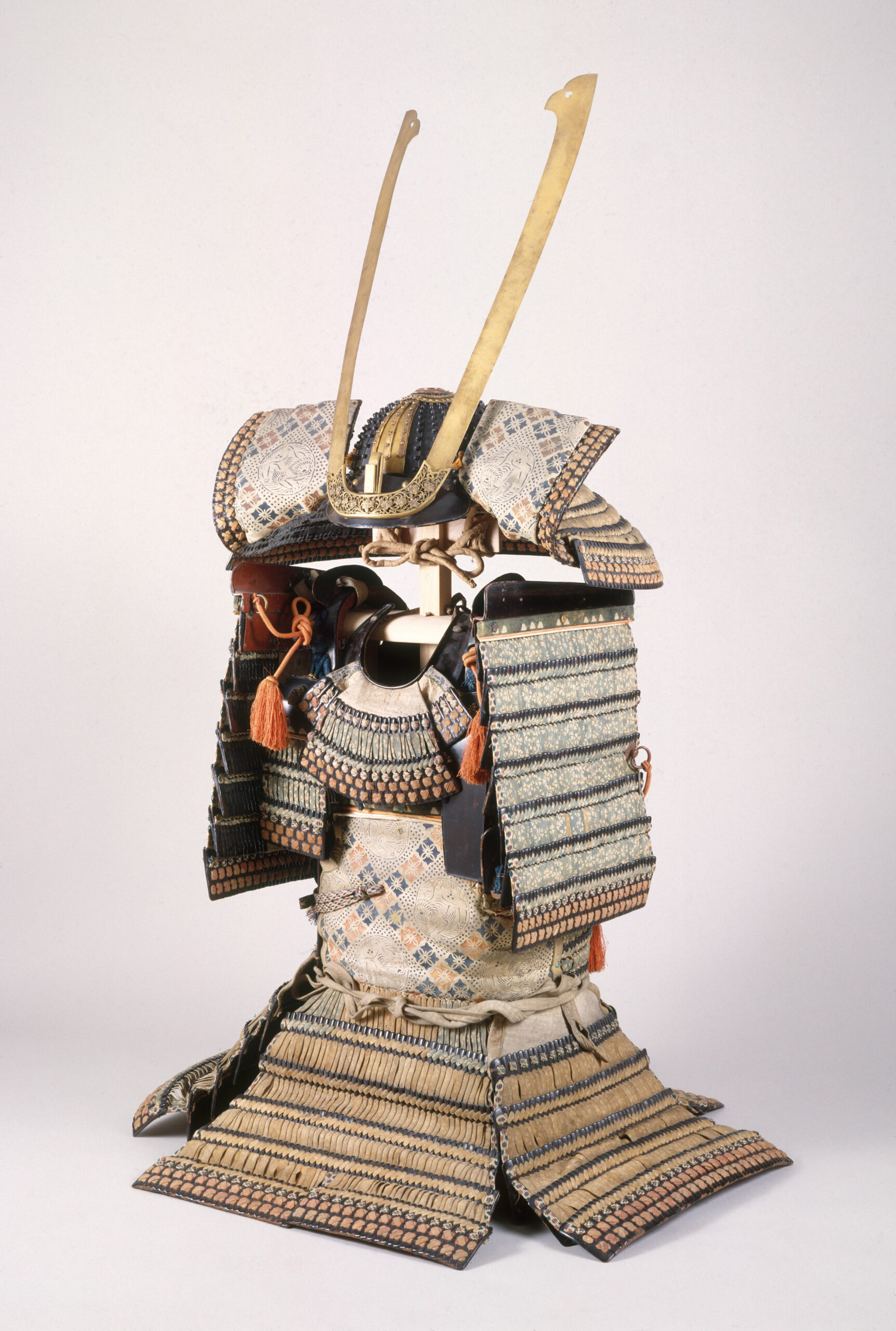
Samurai armor — known collectively as yoroi or gusoku — is one of the most elegant defensive systems ever invented. Every single plate, cord, and lacquered panel had a name, a function, and a place on the warrior’s body. In this complete guide we walk through every piece of samurai armor, from the horned kabuto helmet down to the shin-protecting suneate, explaining what each element was made of, what it protected, and why the Japanese approach to armor evolved so differently from European plate harness.
Why Samurai Armor Looked Different
European plate armor was built to stop thrusting weapons; samurai armor was built to stop arrows and katana cuts while remaining light enough for mounted archery. The result was a modular, lamellar design — thousands of small lacquered plates (kozane) laced together with silk or leather cords (odoshi) — that distributes impact across the weave rather than concentrating it on a single rigid panel. According to the Wikipedia entry on Japanese armor, the classical ō-yoroi of the Heian period was made of more than 2,000 individual components.
The Head: Kabuto, Menpō, and Shikoro
Kabuto — The Helmet
The kabuto is the iconic samurai helmet. A traditional kabuto is built from riveted iron plates (hachi) radiating up to a ventilation hole at the crown (tehen). Great warlords added a maedate — the horns, crescents, dragons, or sunbursts that became the visual signature of individual samurai. Tokugawa Ieyasu’s horned kabuto is one of the most recognizable helmets in military history.
Menpō / Mengu — The Face Mask
The menpō is the lacquered half-face or full-face mask that covers the cheeks, chin, and sometimes nose. Beyond protection, the menpō was psychological warfare: exaggerated mustaches, bared teeth, grimacing demon faces. It also anchored the helmet cord (shinobi-no-o) tightly under the jaw.
Shikoro — The Neck Guard
The shikoro is the hanging lamellar neck guard attached to the kabuto’s lower edge. It flares outward (fukigaeshi) at the temples to deflect downward cuts from mounted opponents.
The Torso: Dō and Its Variants
Dō — The Cuirass
The dō is the torso armor, the central piece of any samurai harness. Several types evolved:
- Ō-yoroi — the great armor of Heian/Kamakura era cavalry archers, box-like and elaborate.
- Dō-maru — lighter wrap-around type favored by foot samurai.
- Haramaki — opens at the back; even lighter.
- Tōsei gusoku — “modern armor” of the Sengoku era (16th century), featuring large plate sections that resist matchlock fire.
- Nanban-dō — Sengoku-era copies of European breastplates imported by Portuguese traders.
Kusazuri — The Hanging Skirt
The kusazuri are the lamellar skirt panels that hang from the dō and protect the thighs. Four to eight panels is typical, depending on whether the samurai was a foot fighter or a horseman.
The Arms and Shoulders
Sode — Shoulder Guards
The sode are the large lamellar shoulder plates. Their primary job was to form a shield when raised — a Heian-era archer would lift his bow arm and his ō-sode swung over to cover the chest. In the lighter Sengoku armors, sode became smaller and sometimes disappeared entirely.
Kote — Sleeve Armor
The kote is the armored sleeve, combining a cloth underlay with riveted plates and chainmail (kusari) at the flex points. Samurai kote protected the outside of the forearm — the inside was left unarmored for grip freedom when drawing the bow or katana.
⚔ Featured Katana Picks
Handpicked from the Katana Heaven Collection
-
 €582.00
 -
 €296.40
 -
-
The Legs
Haidate — Thigh Armor
The haidate are armored aprons tied around the waist, protecting the thighs above the knees. Constructed as cloth panels with riveted scales or plates — a lightweight solution compared to European tassets.
Suneate — Shin Guards
The suneate are splint greaves that cover the front of the shin. They tie below the knee and above the ankle; a fabric or metal padded strip protects the calf where the knee meets the ground in seiza.
Kōgake — Foot Armor
Kōgake are articulated foot-plates worn over the tabi, used mostly by high-ranking samurai for ceremonial or mounted roles. Most Sengoku foot samurai simply wore reinforced straw sandals (waraji).
Under the Armor
A samurai did not put armor directly on skin. Under everything was:
- Shitagi — the under-kimono.
- Hakama — pleated trousers.
- Kyahan — cloth gaiters.
- Tabi — split-toed socks.
- Yoroi-hitatare — the purpose-made under-armor tunic.
How a Samurai Actually Put the Armor On
The correct dressing order was strict and — like every samurai ritual — never to be changed. The basic sequence:
- Under-tunic and hakama.
- Suneate (shins).
- Haidate (thighs).
- Kote (sleeves).
- Dō (cuirass, laced or latched).
- Sode (shoulders).
- Menpō (face mask).
- Kabuto (helmet, cord tied under the jaw against the menpō).
- Katana slid through the belt, wakizashi beside it.
A skilled attendant could get a samurai into full battle armor in 15 minutes. A samurai dressing himself alone needed closer to an hour. Going into battle half-tied was considered disgraceful — and was actively used as a shaming in samurai fiction.
Frequently Asked Questions About Samurai Armor
How much did a full set of samurai armor weigh?
A Sengoku-era tōsei gusoku weighed roughly 15–20 kg (33–44 lb) — about half the weight of full European Gothic plate from the same century. The classical Heian ō-yoroi was heavier, closer to 30 kg, because of its layered lamellar construction.
Could samurai armor stop a bullet?
High-quality Sengoku dō were proof-tested against matchlock fire — the proof mark (tamaji-ato) on the breastplate literally showed where a bullet was fired and stopped. Against heavy arquebus fire at close range, nothing was fully reliable. Against bows, pikes, and swords, samurai armor was extraordinarily effective.
What color thread did samurai armor use?
Armor lacing (odoshi) came in nearly every color. Color carried clan identity: Sanada red, Uesugi white, Date indigo-and-black. The red-laced armor pictured at the top of this article is a classical display piece preserved at Kasuga Shrine in Nara.
Round out the samurai picture with our guides on famous samurai and their swords and everything you need to know about samurai. To handle a genuine hand-forged katana yourself, browse our battle-ready catalog.